Invoice Factoring for Dump Truck Haulers, Explained
Bolton Team
•

Invoice Factoring for Dump Truck Haulers: A Plain-English Guide
If you run trucks, there's a good chance nobody ever explained this option to you. Most haulers we talk to have never heard the word "factoring," or they've heard it and assumed it's some kind of loan. It isn't. Here's what it actually is, in plain English.
The problem it solves
You finish a job. The ticket is signed. The work is done. And then you wait. 30 days. 45 days. 60 days. Sometimes 90. Meanwhile, your fuel bill doesn't wait, your payroll doesn't wait, and if a truck needs a repair, that doesn't wait either.
That gap between finishing the work and getting paid for it is the whole problem. Invoice factoring, or invoice funding, closes that gap.
What invoice factoring actually is
You already did the work. You already earned the money. Factoring just gets you that money now instead of in 60 days.
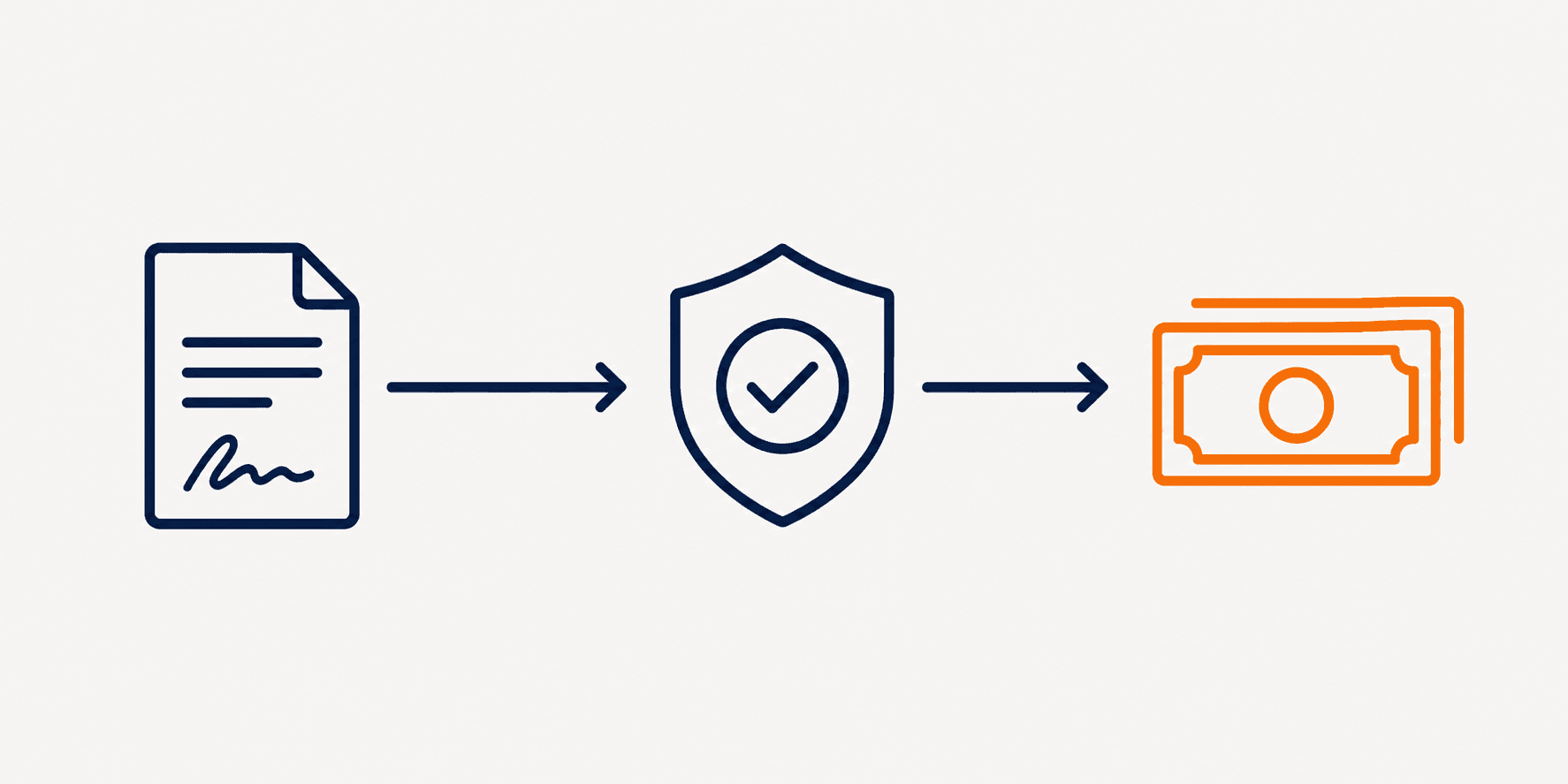
Here's the mechanism: instead of waiting on your customer to pay your invoice, you sell that invoice to a funding company for cash today, minus a fee. When your customer eventually pays (30 to 60 days later, same as always), the funding company collects it. You get most of your money fast, they get a fee for fronting it, and your customer's payment terms don't change at all.
Here's what that looks like with real numbers. Say you finish a job and invoice a general contractor for $20,000. Normally you'd wait 45 or 60 days for that check. With invoice funding, once the ticket is verified, most of that $20,000 lands in your account within hours. The rest sits in reserve until your GC actually pays on their normal schedule, at which point you get that reserve back too, minus the agreed fee. Same $20,000 job. Same customer. Same payment terms for them. The only thing that moved is when you got paid.
Nothing about your customer relationship changes. They still pay on their normal schedule. The only thing that changes is you're not the one waiting on the money.
How it works, step by step
1. Complete the job. Your drivers haul, tickets get tracked, signed and uploaded.
2. Submit your invoice. As often as you want, no need to batch them up.
3. Get funded. A funding partner verifies the invoice and wires you a large percentage of it, often the same day, sometimes in hours.
4. Collect the balance. When your customer pays (typically 30 to 60 days out), you get the remaining reserve, minus the fee.
That's it. No monthly payments. No debt on your books. You're not borrowing money, you're getting your own money faster.
Recourse vs. non-recourse: the one term worth knowing
You'll sometimes hear the terms "recourse" and "non-recourse" factoring. It sounds more complicated than it is.
· Recourse factoring means if your customer never pays that invoice at all, you're on the hook to pay the funding company back.
· Non-recourse factoring means the funding company takes on more of that risk themselves.
Most factoring arrangements in trucking are structured around verified work: verified tickets, verified GCs, verified projects. The stronger the verification behind an invoice, the less this distinction tends to matter in practice, because a well-underwritten invoice rarely goes unpaid. Ask any funding partner directly which structure they're offering you and what happens in the rare case a customer doesn't pay. A straight answer to that question tells you a lot about who you're working with.
This is not a loan
Worth repeating, because it's the most common confusion: factoring is not a loan. There's no monthly loan payment and no debt showing up on your balance sheet. You're selling an asset you already own, an unpaid invoice, for cash now.
How you get approved
At Bolton, underwriting isn't about your personal credit score. Bolton looks at the project and the general contractor behind it: has this GC paid on time before? Is the job real, is the work verified, and does it have payment protections? That's the underwriting question, not whether you've got six months of clean personal credit. It means newer operators and growing fleets can often qualify for funding a bank would turn down, because the thing being underwritten is the work, not you personally.
Who this is for
Bolton’s factoring solution is built for bulk haulers on construction-adjacent jobs: dump trucks, aggregate, and bulk waste hauling, where a general contractor sits between you and getting paid. If you're running over-the-road freight with different customers and a different payment rhythm, Bolton is not the right solution.
Why this matters more for dump truck haulers specifically
Roughly 400,000 dump trucks operate in the US, and most of that work runs through general contractors on 30 to 60 day payment cycles. That's a brutal cash flow rhythm for a business where payroll is weekly and fuel is due now. Bulk hauling has its own rhythm, and generic factoring products built for over-the-road freight don't always fit it.
Bolton Capital was built specifically for that gap. Through our integration with TruckIT's digital ticketing platform, load data (GPS timestamps, geofencing, digital tickets) is already verified before you even submit an invoice. That's why funding can happen in hours instead of the days or weeks a manual verification process takes elsewhere.
Juanita Marry, founder and CEO of Accession Distribution in Riverdale, GA, put it this way: "Getting funded as fast as within 4 to 5 hours has given us enormous flexibility and freedom." Nani Bernal, CEO of One Choice Logistics in Davie, FL, was carrying more than $600K in invoices when Bolton funded $400K in 48 hours, with the remaining $200K the following Monday.
What to ask before you sign with anyone
· How do they verify the work before funding it? (Manual verification is why traditional factoring is slow.)
· Do they expect all your invoices to route through them, or will they let you cherry-pick just the slow payers? Most legitimate factors want your full book once you're set up, not just your problem accounts. Get the specifics in writing.
· Is your rate clear upfront, or buried in fine print? Ask for it in writing before you commit to anything.
· What happens to your relationship with your GC? (More on that in our next post.)
Invoice funding isn't complicated once someone actually explains it. You did the work. You earned the money. This just gets it to you faster.
Ready to see your numbers? Apply Now. No commitment, no hard credit pull.